Revenue from the Frequency Containment Reserve? It’s possible.

Electricity consumption is rising, and the share of renewable energy sources is growing. Balancing the power grid is therefore crucial. Grid balancing ensures that supply and demand are always in equilibrium. This prevents overloading and power outages. Various methods, such as demand response, energy storage, and flexible power generation, help achieve this. In this article, we discuss the role of the Frequency Containment Reserve (FCR) and why this method is essential for a stable power grid.
What is the Frequency Containment Reserve?
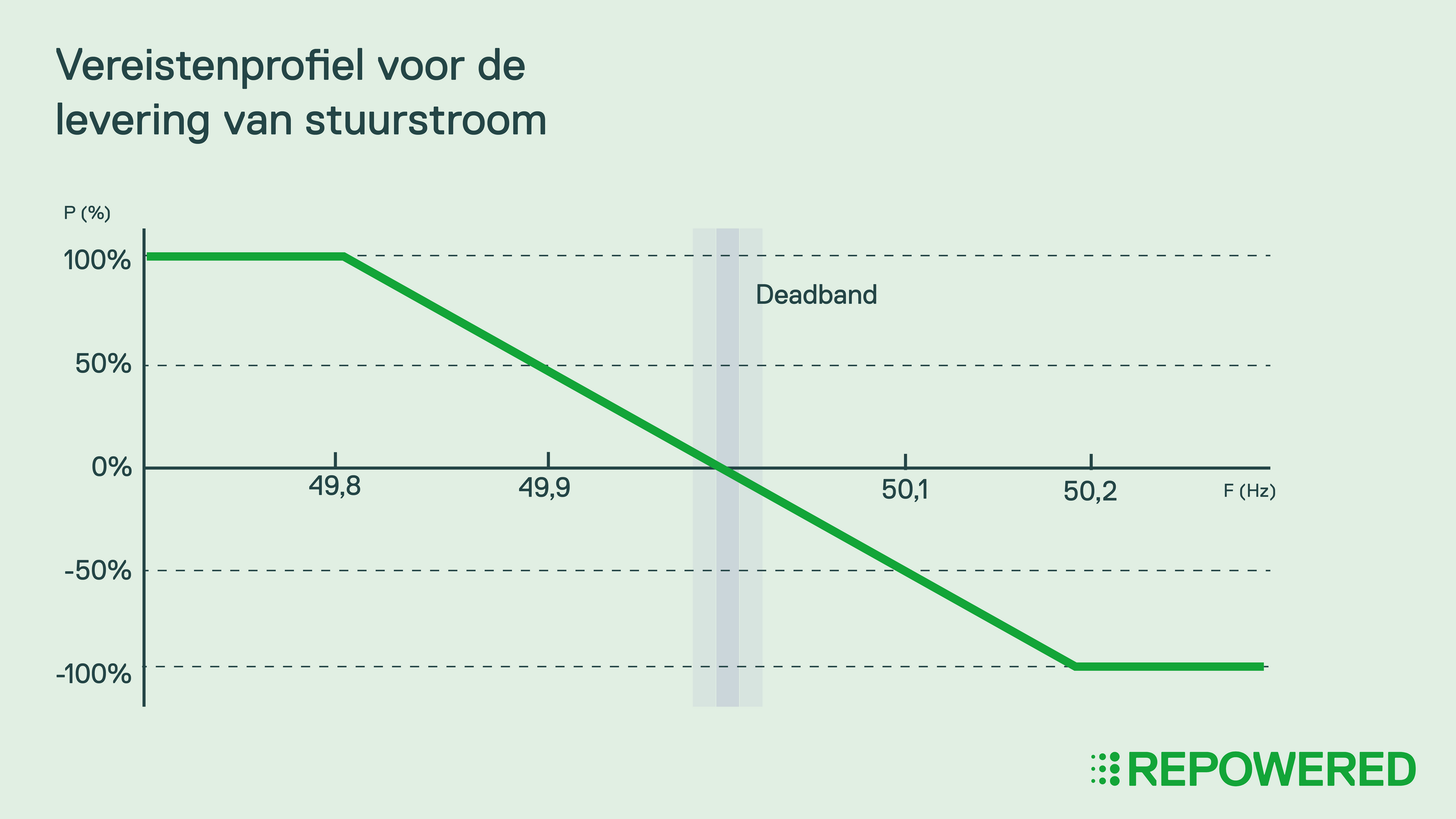
Frequency Containment Reserve (FCR)—primary reserve power—can be seen as the grid operator’s first line of defense for maintaining grid balance. When the grid frequency deviates from 50 Hz, FCR responds within 30 seconds to restore balance. Primary reserve power is activated based on frequency deviations in the grid, and activation occurs automatically. Therefore, no signal from the grid operator is required. This prevents power outages and ensures the grid remains reliable.
How is primary reserve power generated?
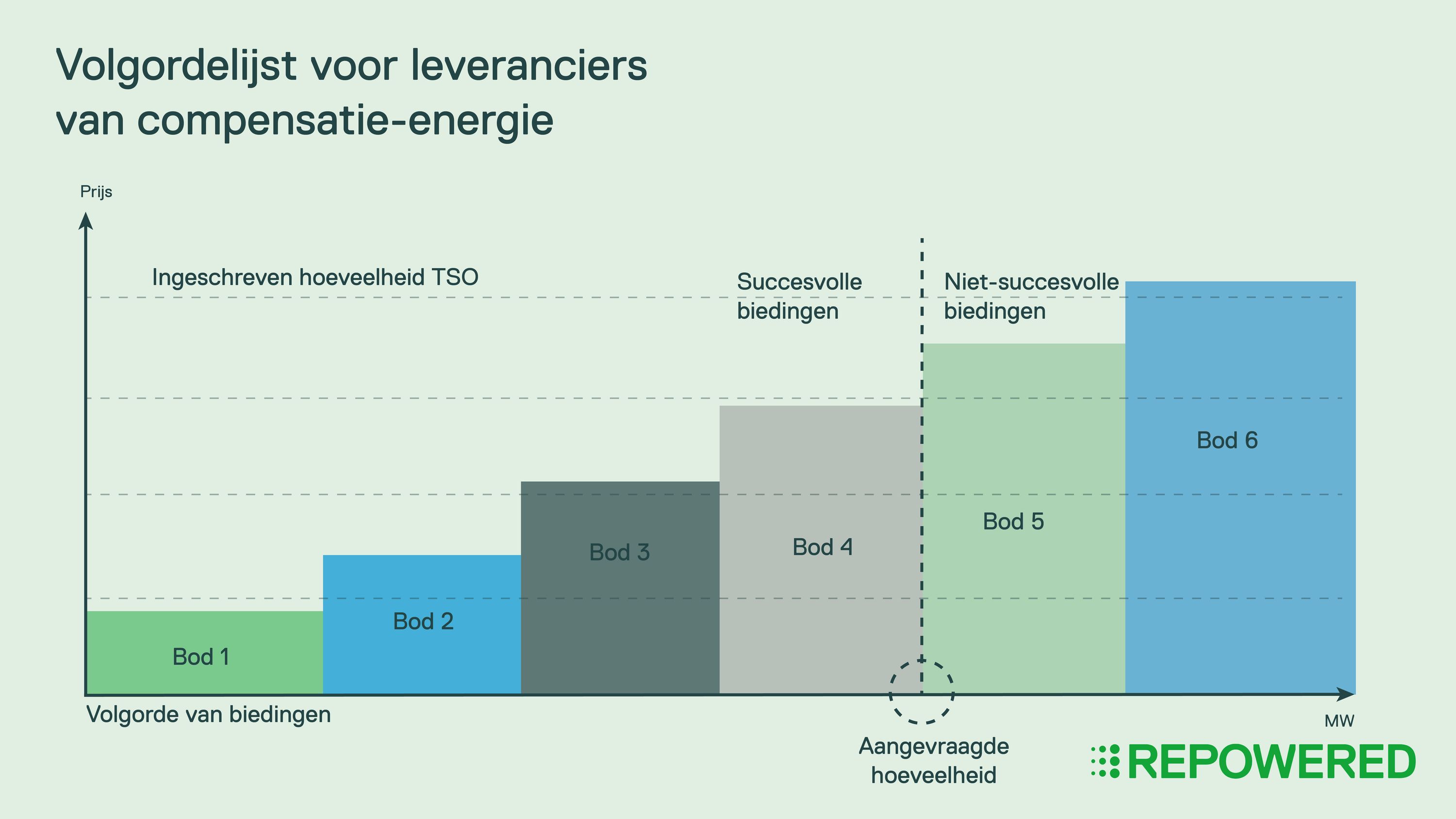
Primary capacity becomes available through bids in tenders issued by the grid operator Tennet. All market participants that meet the minimum product requirements can participate. In practice, this means that the FCR market is not suitable for “ordinary” companies to participate in. However, if a company has energy storage via batteries, FCR could be of interest. These FCR auctions were held weekly until 2019. Nowadays, they are daily auctions. Tennet selects bidders based on a merit order. This is a method for determining the order in which different energy sources are deployed based on their variable costs. In this context, the merit order is used to determine which technology is deployed first to meet the demand for frequency control. Selected market participants are then paid the price they bid: paid-as-bid.
What are the benefits of bidding?
It can be beneficial for businesses to participate in the bidding process: TenneT pays for the energy you offer. This allows you to generate additional revenue. Especially if you have flexibility in your energy consumption or production, it can be worthwhile to offer your energy. This applies, for example, to businesses that can store energy or adjust their demand. Offering a larger volume gives you a better market position. As a result, it can be beneficial for a company to join a “pool,” such as a virtual power plant. This gives you a stronger position. By participating in the bidding process, you not only generate additional revenue but also contribute to a more stable energy grid.
How does FCR work?
Electricity consumers, generators, or storage systems can therefore offer their flexible capacity to stabilize the grid frequency. Since this must happen fully automatically, a frequency meter is installed on the equipment to continuously measure the grid frequency. When the grid frequency deviates from the standard frequency of 50 Hz, the frequency meter sends a control command to the system to adjust the power: if the grid frequency rises, the equipment reduces the power output or directs the power to batteries. If the grid frequency drops, electricity production is ramped up or stored energy is fed into the grid. For the provision of FCR, a reserve price is paid for the entire bidding period—there is no separate activation price.